Published on August 26, 2026
China Art Museum. Breakfast Through a Hatch
by Florian Jäger
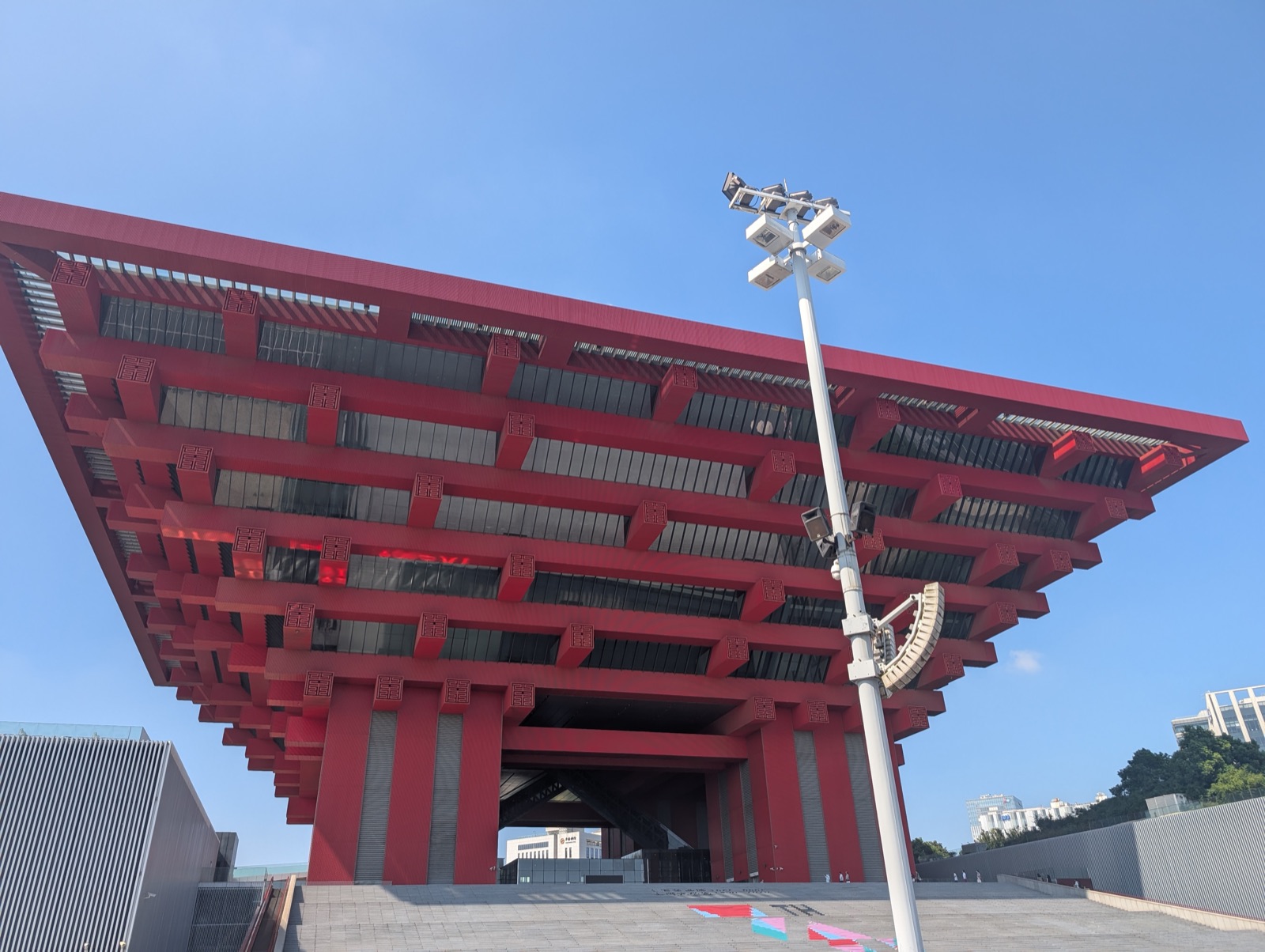
Der ehemalige China-Pavillon der Expo 2010, heute Chinesischer Kunstpalast. Foto: Florian Jäger, 26. August 2026
From below the building looks as though someone had set a crown down upside down. Red, stepped, widely cantilevered, sixty-three metres tall. It is the Chinese pavilion of Expo 2010, the tallest structure on the site at the time, designed by He Jingtang of the South China University of Technology. He derived the cantilevers from the dougong, the wooden bracket system of traditional Chinese architecture. Seventeen million people passed through it during the world exposition.
Expo pavilions are built for six months and afterwards usually demolished. Not this one. In November 2011 the city decided to house the art museum here, and since 1 October 2012 the building has been called the China Art Museum. Sixty-four thousand square metres, more than fourteen thousand works, with an emphasis on Chinese modernism. The building is larger than what it shows, and in the corridors you notice it.
The reason to go anyway hangs on an upper floor and is two years old. Xie Wenjin, oil on canvas, 2024, one hundred and thirty by two hundred and thirty-five centimetres. On the left a Shanghai breakfast stall in operation, six staff in white coats, paper caps and face masks, bamboo baskets of baozi, a plate of youtiao, above them the photographed menu boards. On the right, separated by a blue wall, a pickup cabinet with numbered hatches, from which a woman takes her bag.
It is genre painting in the oldest sense and it describes something very new. The same meal, once across a counter and once through a hatch. The woman stands with her back to the six people who made her food; they are in the same room and no longer have anything to do with one another. Anyone wanting to know what becomes of realism when reality goes digital will find an answer here, and one without complaint.
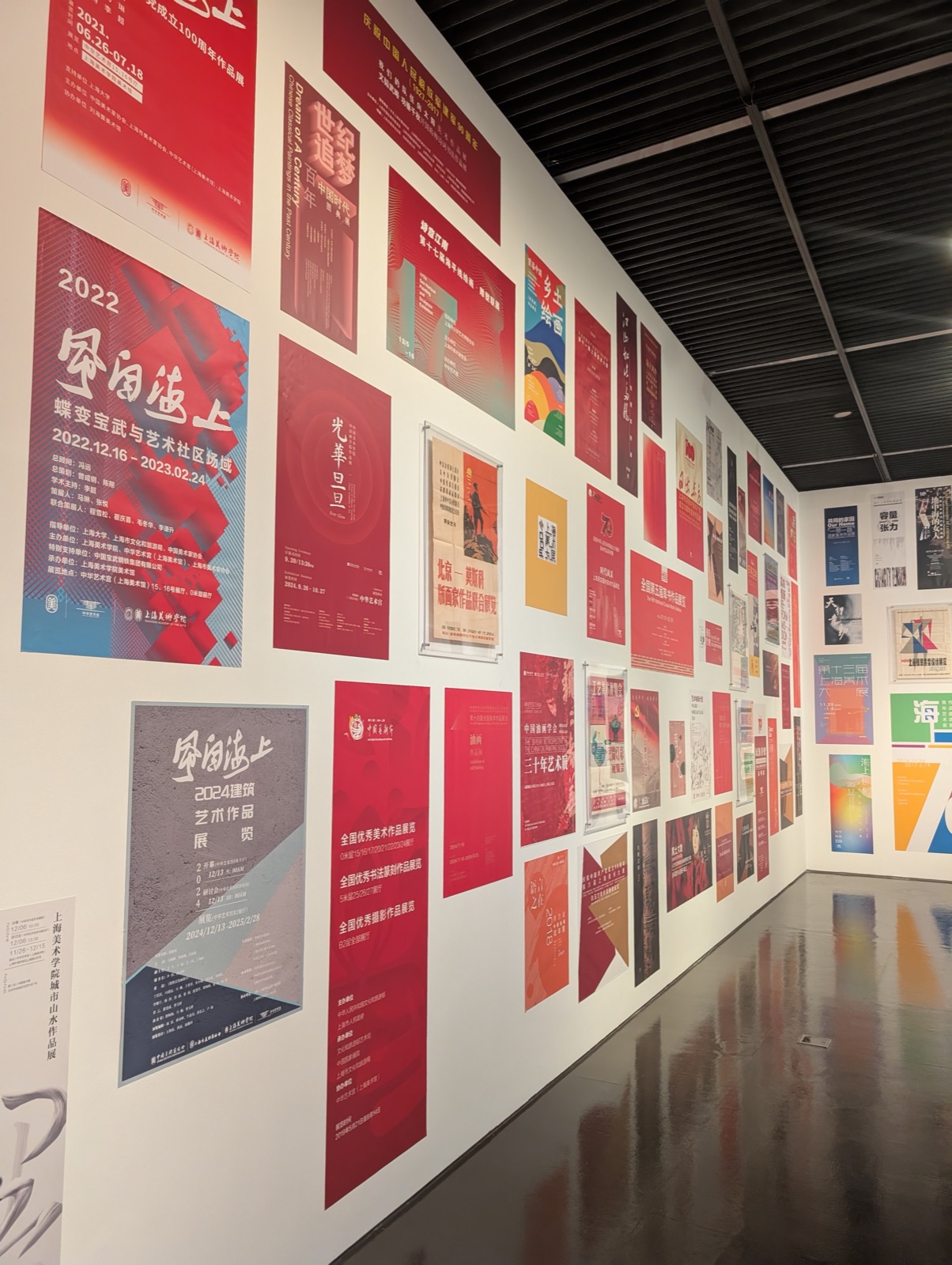
A corridor further on the building's own history hangs on the wall, sixty or seventy exhibition posters side by side, overwhelmingly red. Anniversary shows, emerging-artist formats, classical painting, an architecture exhibition. It is the most honest self-portrait in the house, because it shows the operation rather than the ambition. The pavilion was planned for half a year and is now in its seventeenth.
Impressions