Published on
Rebecca Brodskis. The Last Ones Awake
by Florian Jäger
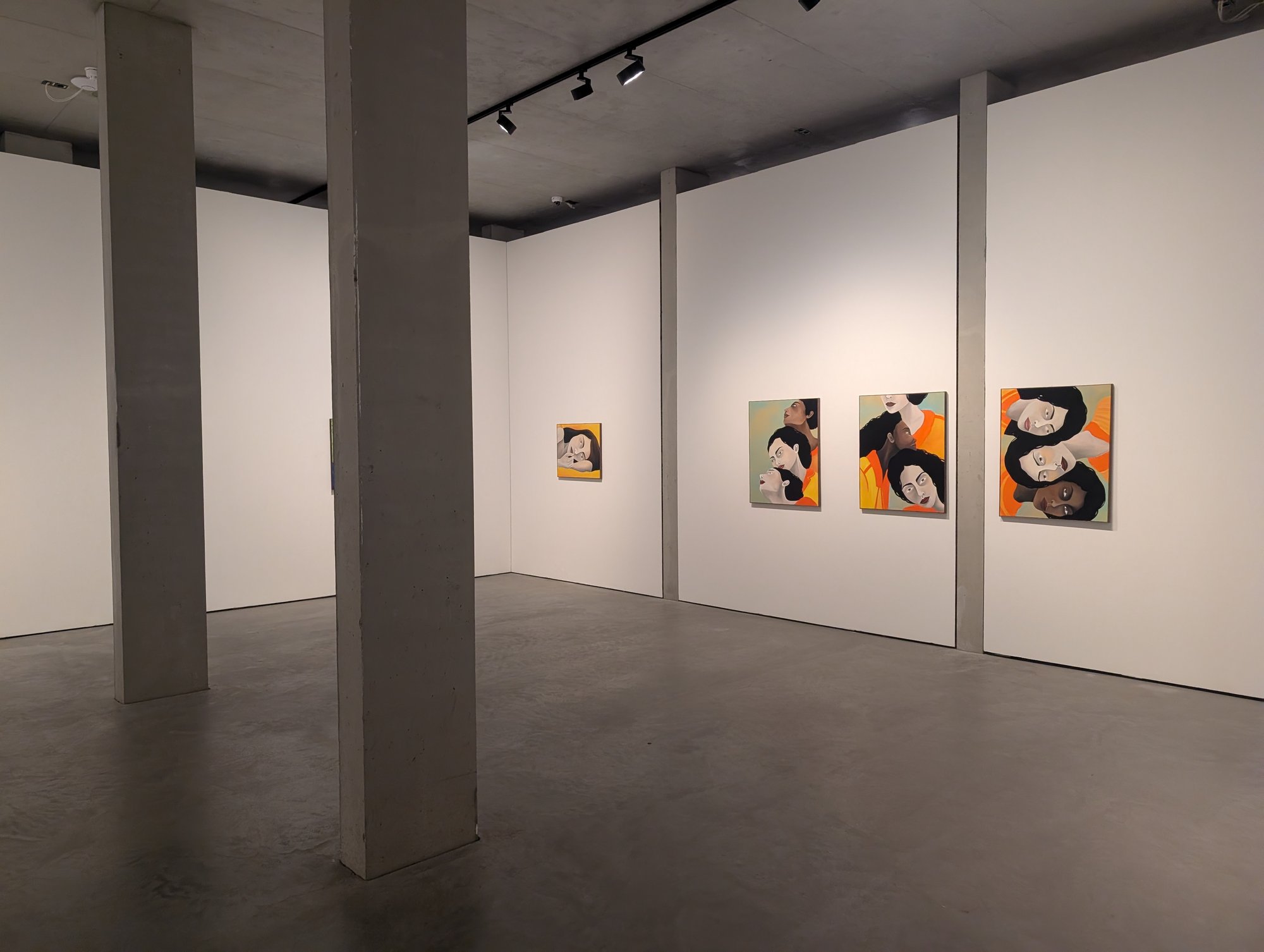
Rebecca Brodskis, „The Last Ones Awake", im Vault von St. Agnes. Foto: Florian Jäger, 12. September 2026
Saturday 12 September 2026, St. Agnes in Kreuzberg. The former church from the nineteen-sixties has been run by König Galerie since May 2015, and in the Vault, the low room with concrete columns standing in the middle of the plan, Rebecca Brodskis' "The Last Ones Awake" has been hanging since 9 September. It opened on 8 September during Berlin Art Week with a performance by the dancer Aurora, and runs until 8 November.
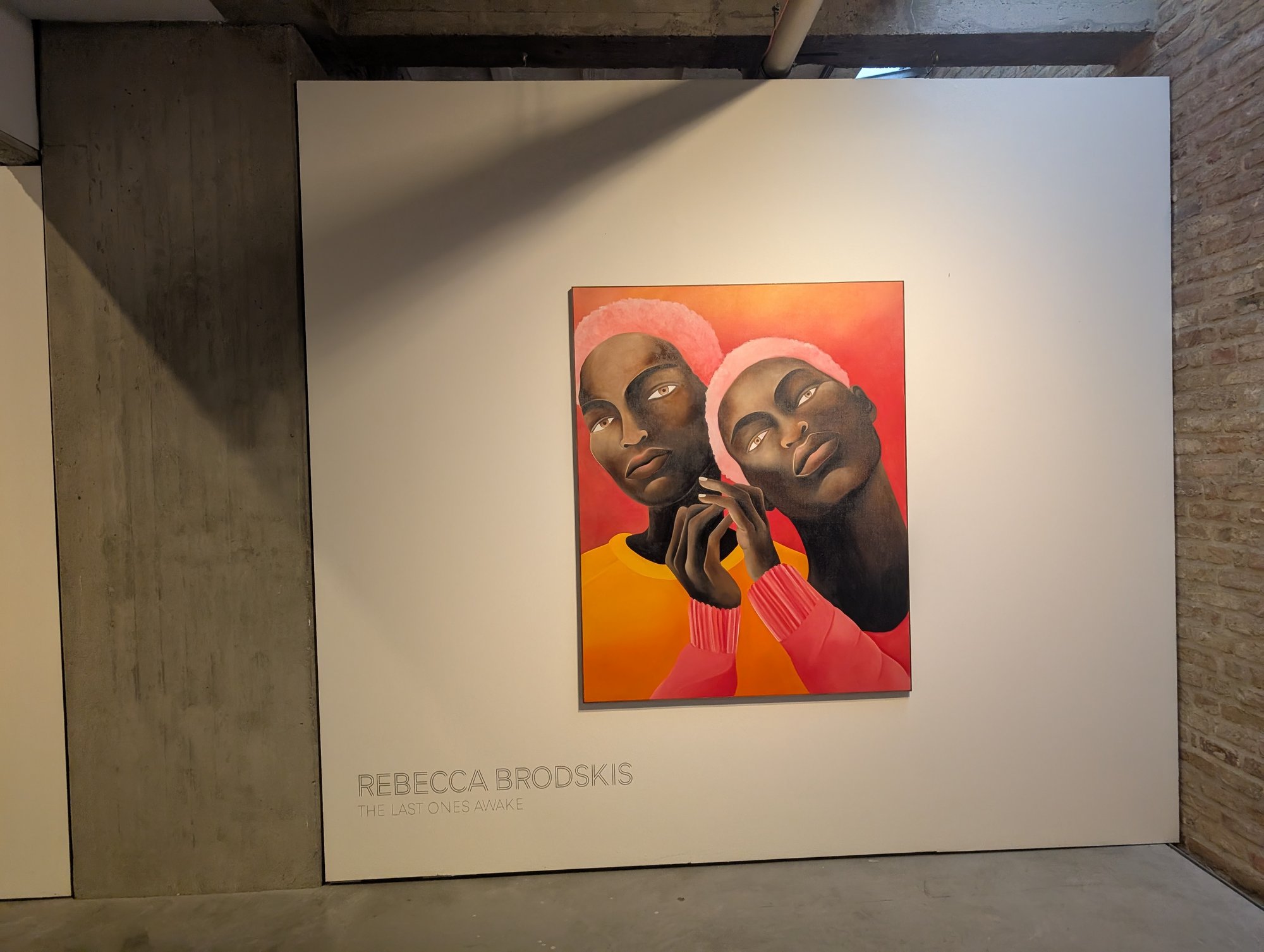
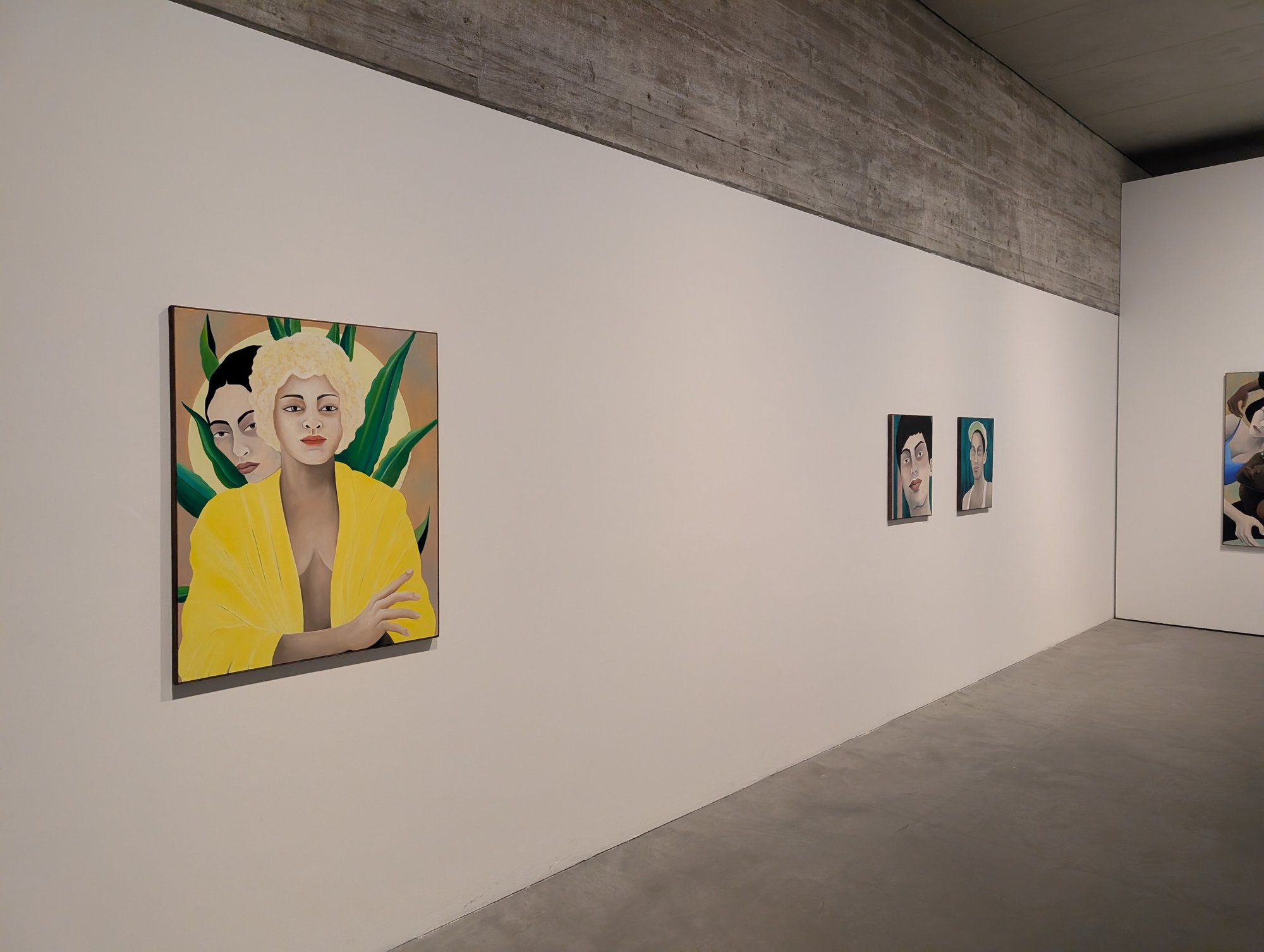
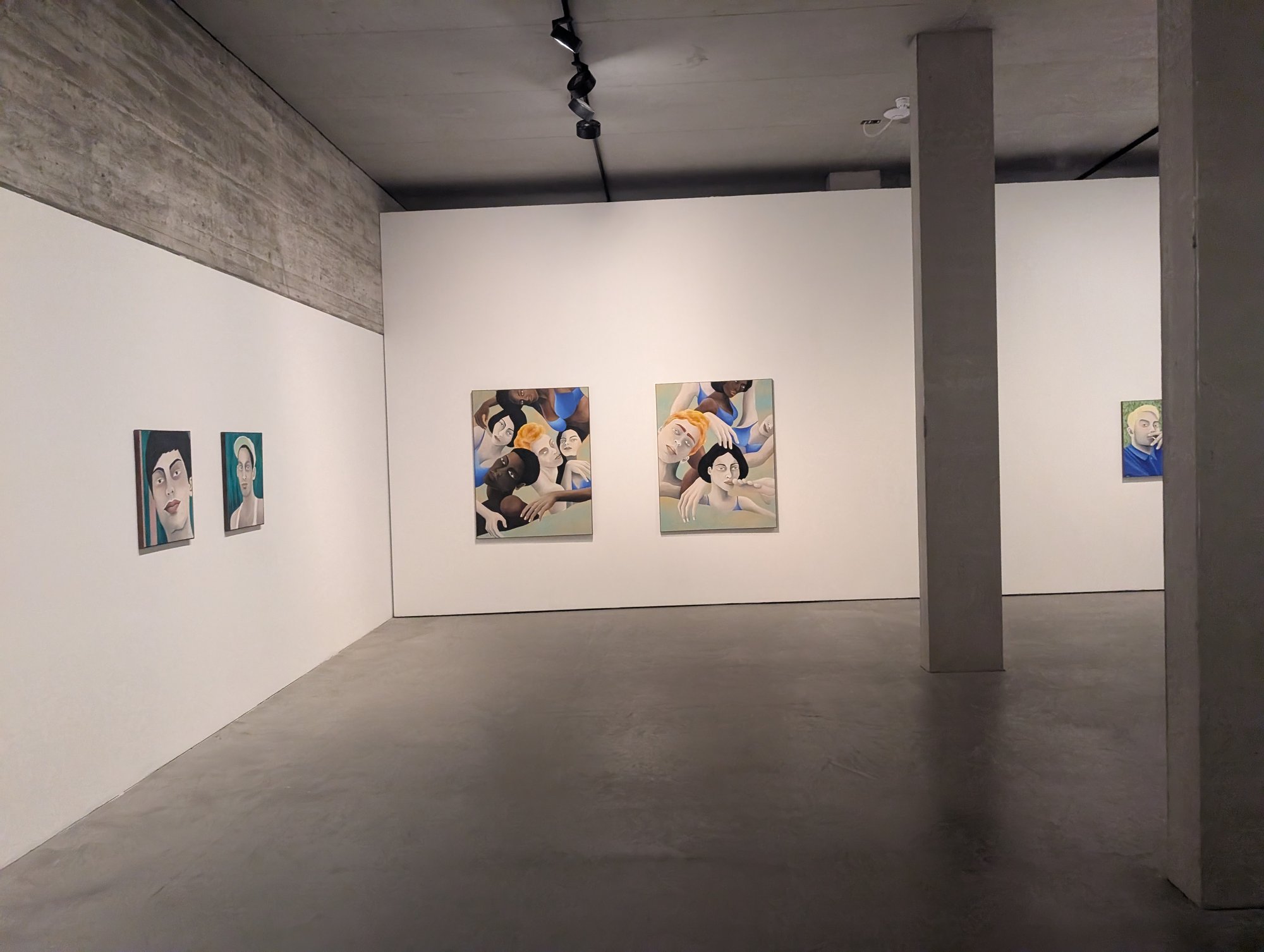
White walls, exposed concrete on the columns and the ceiling, track spots, a polished floor. Three paintings hang side by side on the long wall and a fourth on the end wall: heads, three or four to a canvas, pushed into one another like cards someone is fanning out. The hair is laid in as flat black without drawing, the clothing orange and yellow, the ground turquoise or red. In another painting two figures sit against a red-orange ground, both with a ring of pink hair, one hand resting on the other's chin. A woman in a yellow robe stands in front of a pale disc and green leaves, with a second face half visible behind her shoulder. On the wall behind it hang two paintings in which figures in blue swimsuits are layered over one another like swimmers at the edge of a pool, hands on other people's shoulders, heads against other people's necks; on the short wall beside them, two small panels with single faces.
Brodskis, born in France in 1988, studied at the Beaux-Arts de Paris and at Central Saint Martins in London, graduating in 2010; she lives and works in Paris. What she paints are close friends from her years in Berlin. The gallery describes the series as a portrait of a city remembered through the people who shared it, and each single painting less as the likeness of a person than as a fragment of a collective memory.
What stands out is where the figures look. Nobody is alone on any canvas, the heads almost touch, and yet no gaze meets another. One looks up and out of the picture, the second past the first to the right, the third has her eyes half closed. Hardly anyone fixes the viewer either. The group holds together in the composition and nowhere else, and that is exactly why the series works as memory rather than as a picture of friendship.
The room helps. The columns stand in such a way that you never see all the paintings at once: whichever one you stand in front of, another is hidden.
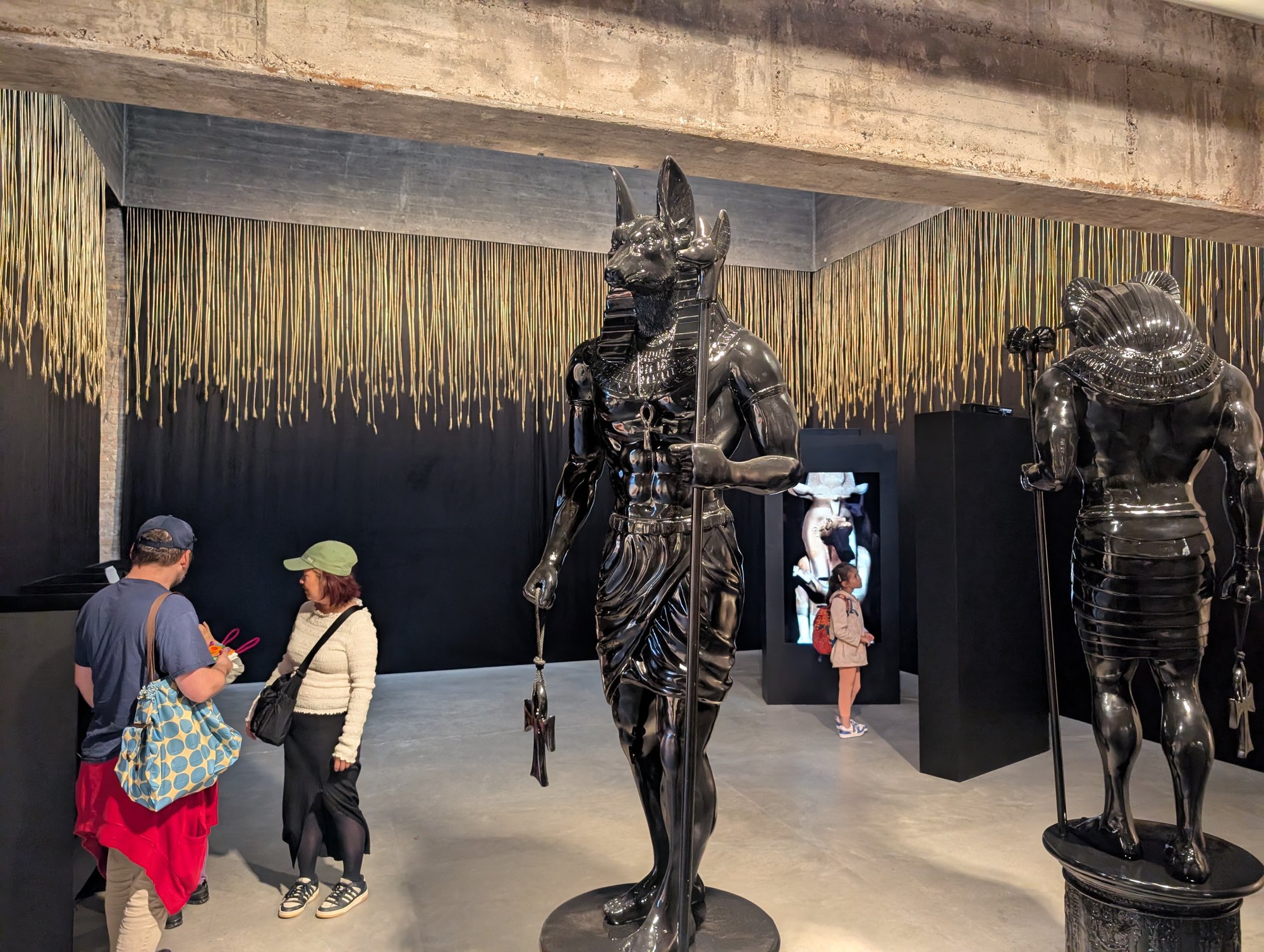
A room further on, behind a curtain of golden rods, glossy black figures after Egyptian models stand in a darkened cabinet, one of them with a jackal's head, a staff and an ankh in its hands. That is a separate exhibition in the same building; whose it is was not on any label I came away with.
Photographs: Florian Jäger, 12 September 2026.
Impressions