Published on August 26, 2026
Shanghai Museum East. The City in the Window
by Florian Jäger
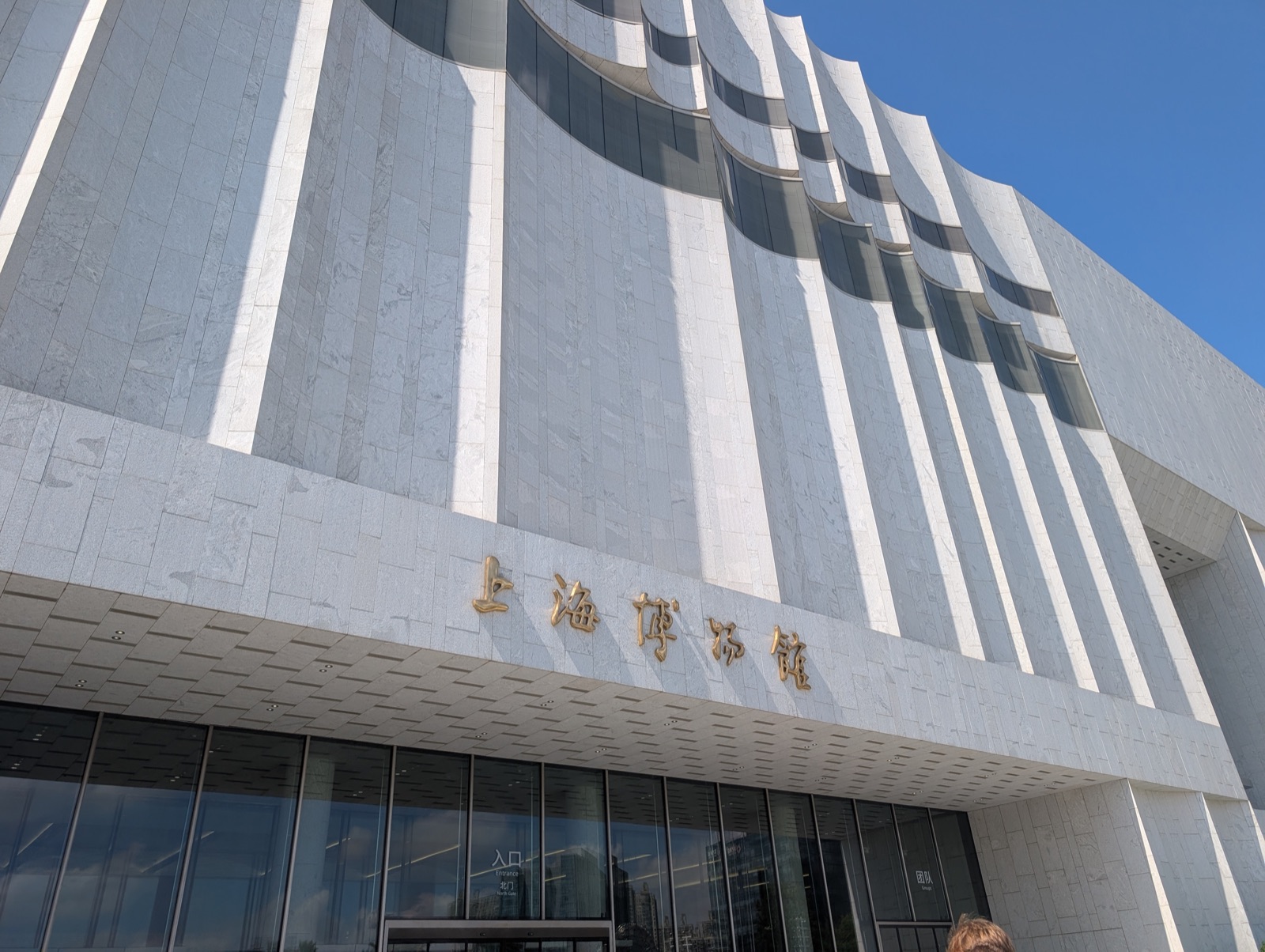
Der Ostbau des Shanghai Museum an der Century Avenue. Foto: Florian Jäger, 26. August 2026
1952 Century Avenue, Pudong. Thirty years ago there were fields here; since 2024 the East Building of the Shanghai Museum has stood on them. Its pale stone facade wraps the building in shallow waves and from a distance recalls a rolled sheet of paper. It was designed by the architectural institute of Tongji University, which won the tender. The opening dragged on for a year: first sections in February 2024, public opening on 26 June, the building finished only in November.
Twenty exhibition halls, eight of them permanent, arranged by genre rather than period. Bronzes, calligraphy, painting, seals, ceramics, coins, sculpture, jade. The building is designed for twenty thousand visitors a day. On a Wednesday morning in late August you notice little of that; the halls are full and still walkable, and nobody pushes at the cases.
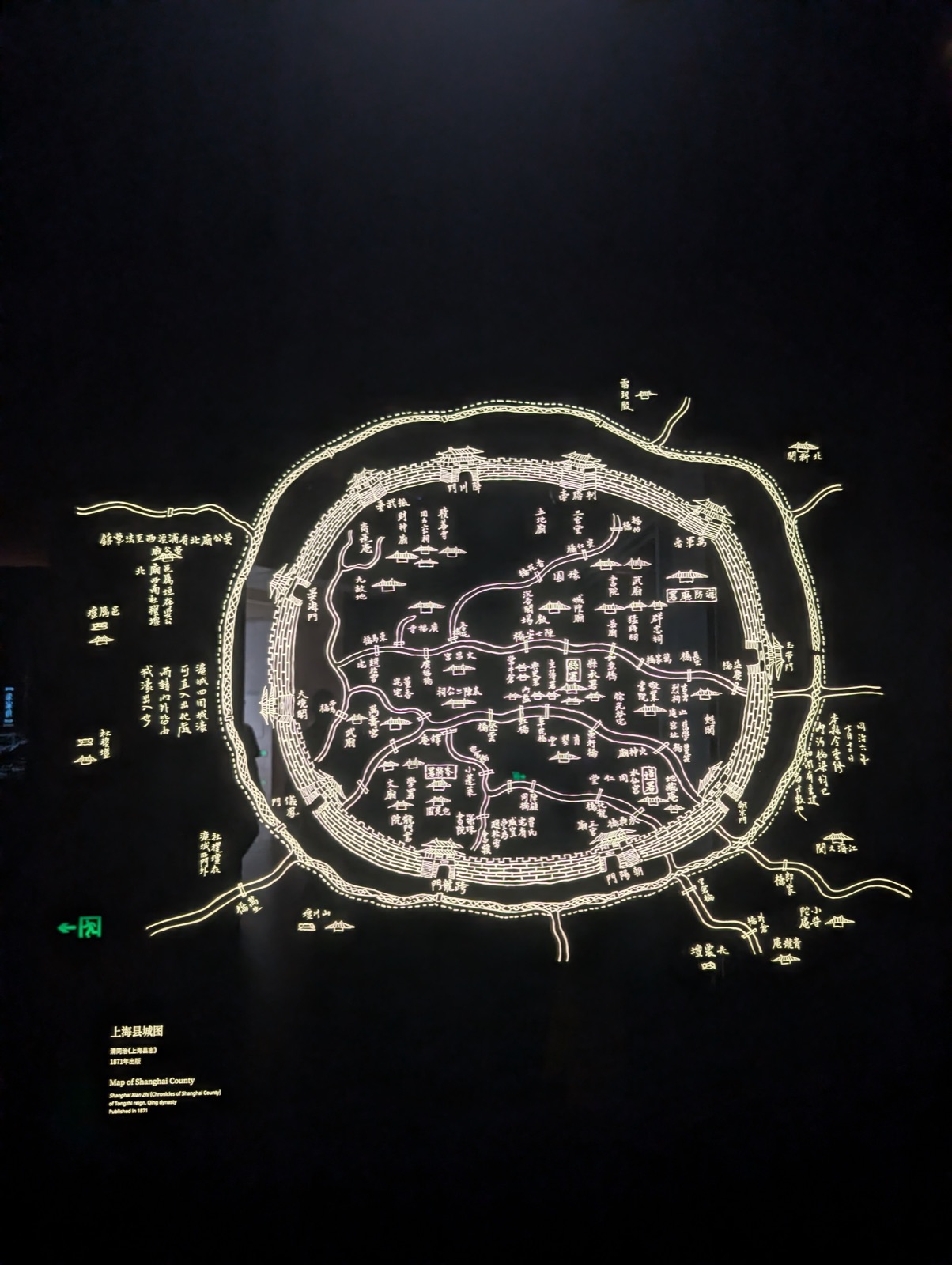
In the ceramics section stands a rouleau vase of the famille verte, pale green ground, pavilion scenes on several levels, a boat in a lotus pond below. The case reflects the people standing around it into the picture, which for once is not a flaw: on the vase, people watch each other doing something, and in front of it people do the same. A floor further on, a map of Shanghai county hangs in the dark as a glowing line drawing, from the chronicles of the Tongzhi era, printed in 1871. An oval city wall, four watercourses, a few dozen labelled temples, bridges and offices. The city was not much more than that back then.
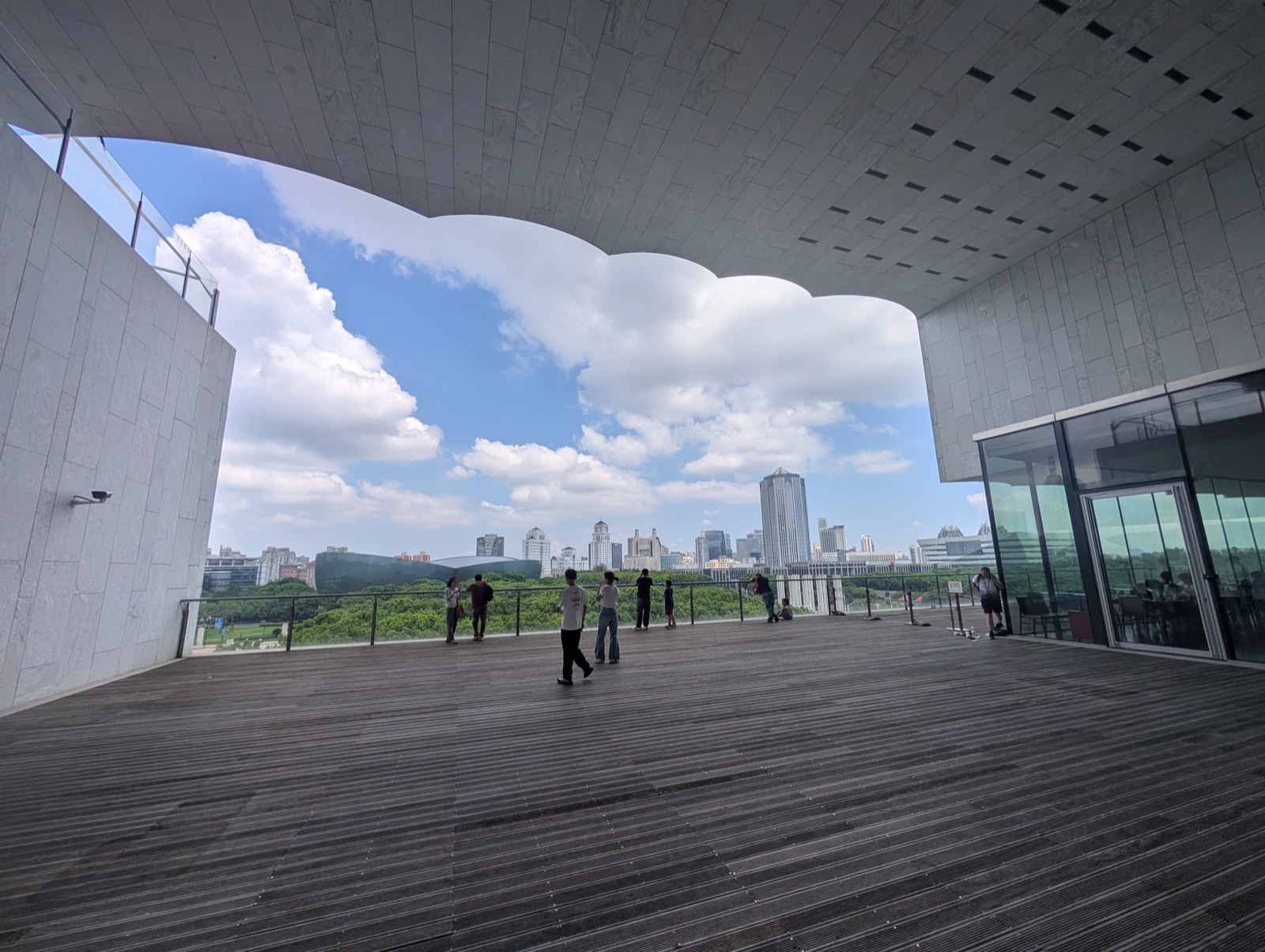
The building's best argument, though, is not on display but underfoot. On the roof terrace the ceiling cuts a soft, cloud-shaped edge into the sky, and beneath it there are timber boards, a railing and the city. To the west the Science and Technology Museum with its fanned roof, beside it the Oriental Arts Center, behind them the towers. Children hang on the railing, adults take photographs. A museum for millennia of Chinese art whose most open room faces outward, quietly continuing the map of 1871: that is either a contradiction or the whole point.
Impressions