Published on
Susan Hiller. The Afterlife Is Broadcasting on Every Channel
by Florian Jäger
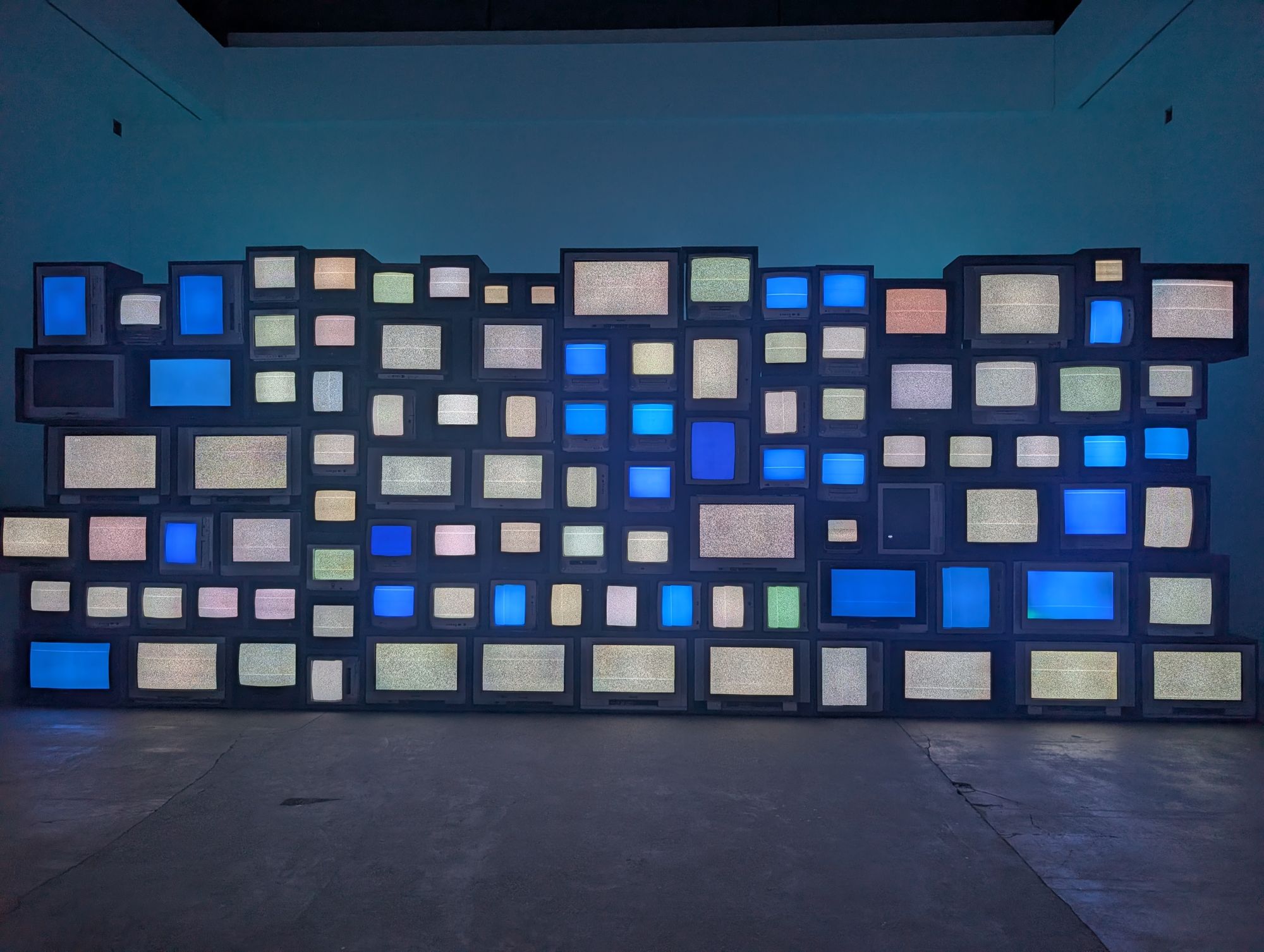
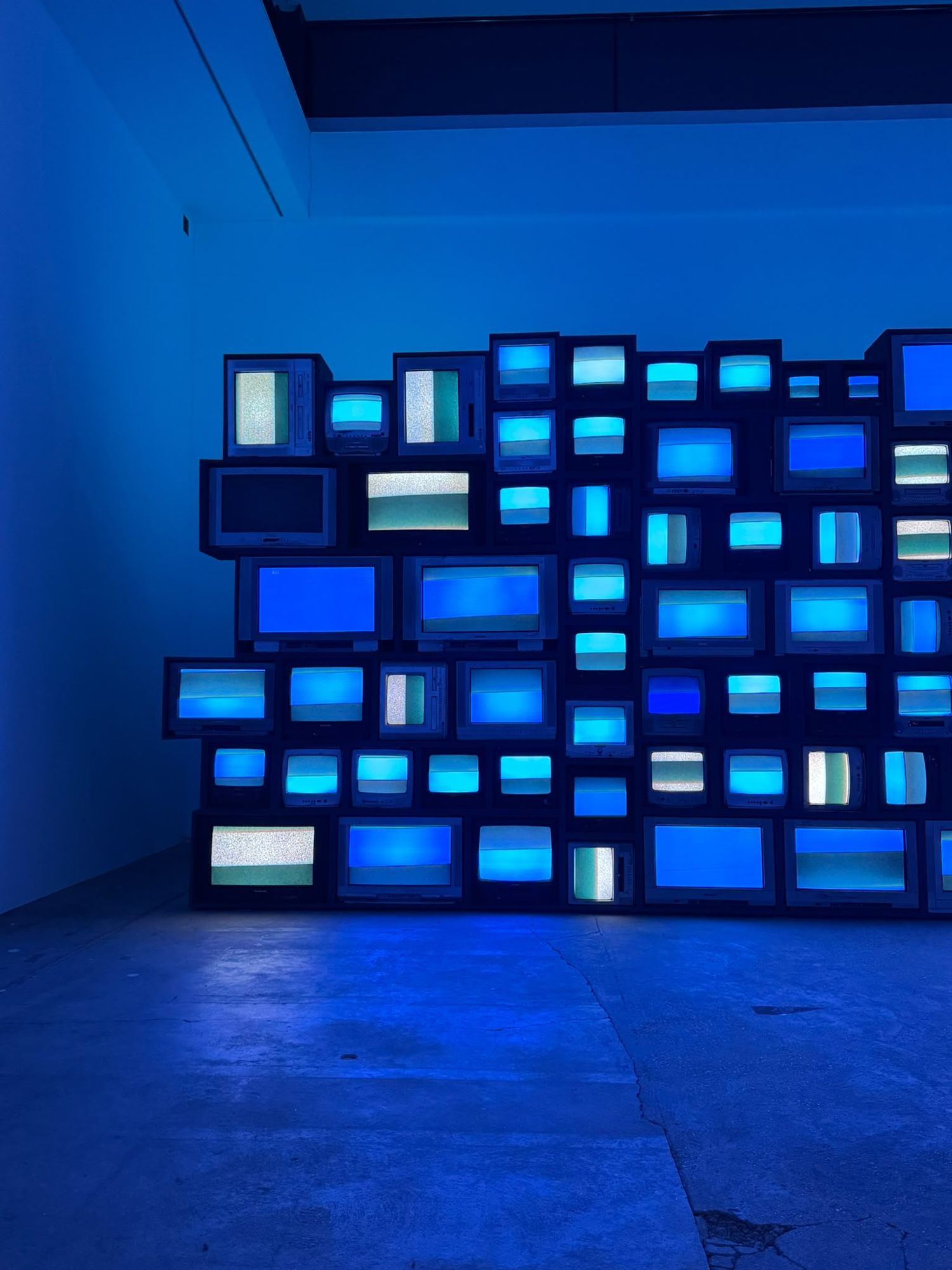
Susan Hiller, "Channels", 2013, wall of cathode-ray televisions on the ground floor of KW. Photo: Florian Jäger, 24 October 2026
Blue. The ground-floor room at KW is so blue that visitors' skin looks like paper. Old cathode-ray televisions are stacked into a wall along the far side, each set flickering in its own shade of blue, and from all of them at once come voices. They talk about dying. A tunnel, a light, a great calm, then the way back into the body. For "Channels" (2013) Susan Hiller gathered accounts from people who had been clinically dead and returned. Not a single image runs on the monitors, only colour and static. With nothing to look at, you listen.
"Bad Dreams" is the artist's first survey in Berlin. Hiller, born in Florida in 1940 and dead in London in 2019, came to the city on a DAAD fellowship in 2002 and stayed for a few years. KW shows her on the ground floor and in the main hall, curated by Emma Enderby and Liberty Adrien. Hiller trained as an anthropologist before she became an artist, and she never shook off the habits of fieldwork. She collects and she labels. What the owners of these things believe, she puts on show without a word of comment.
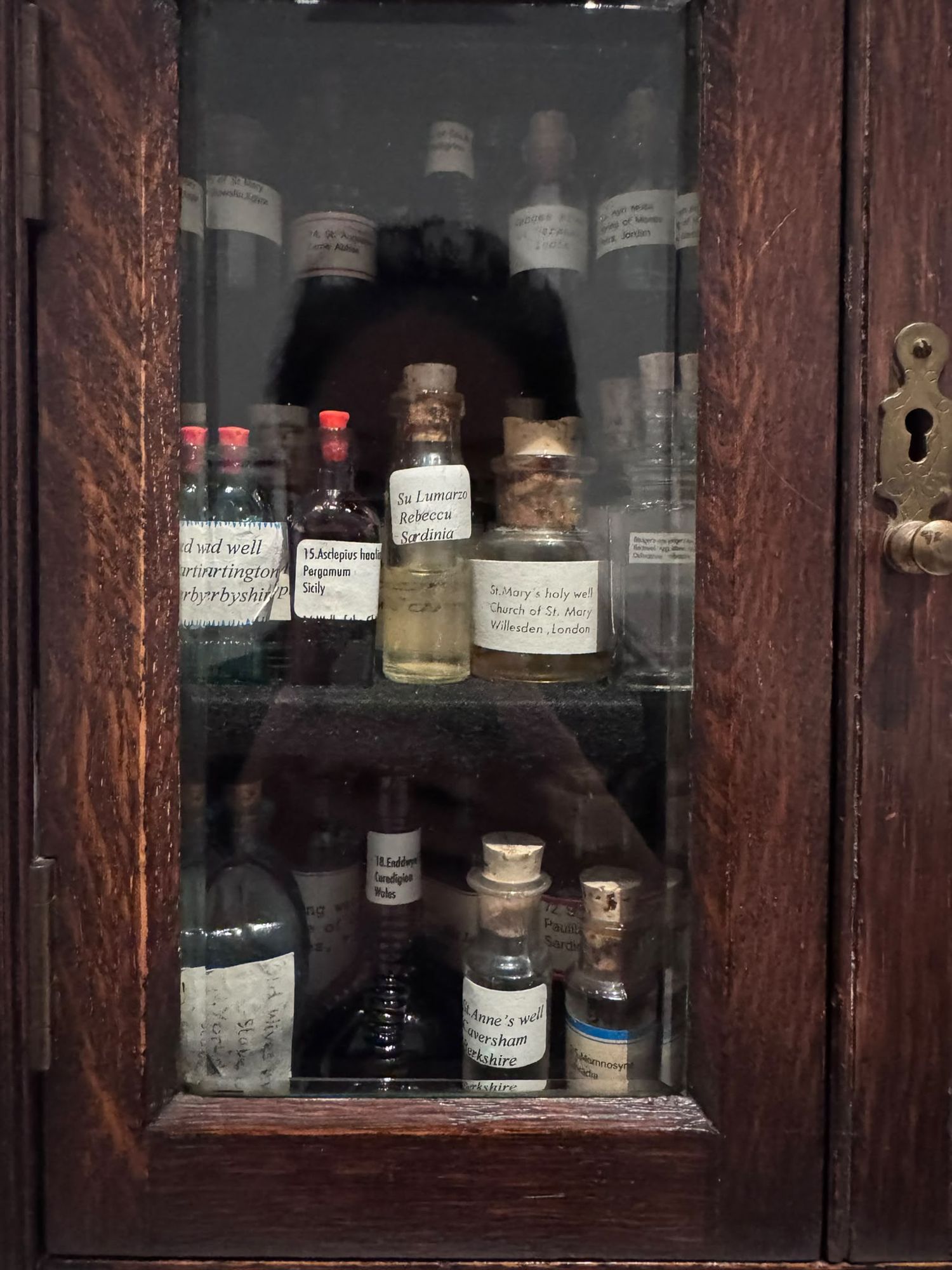
The clearest case is a dark wooden cabinet with a glass door. On felt-lined shelves stand small apothecary bottles, each with a handwritten label: St Mary's holy well, Willesden, London. St Anne's well, Caversham. Su Lumarzo, Rebeccu, Sardinia. Water from springs that have counted as healing for centuries, collected by Hiller since 1969 and arranged in cabinets as "Homage to Joseph Beuys". Beuys trusted fat and felt to heal, the pilgrims trust their water, and anyone standing in front of the cabinet notices that they are looking at the bottles with the same reverence they would give a museum piece. You don't have to believe anything to take part. There is no irony in any of it, and you notice, because with this subject irony is usually the default.
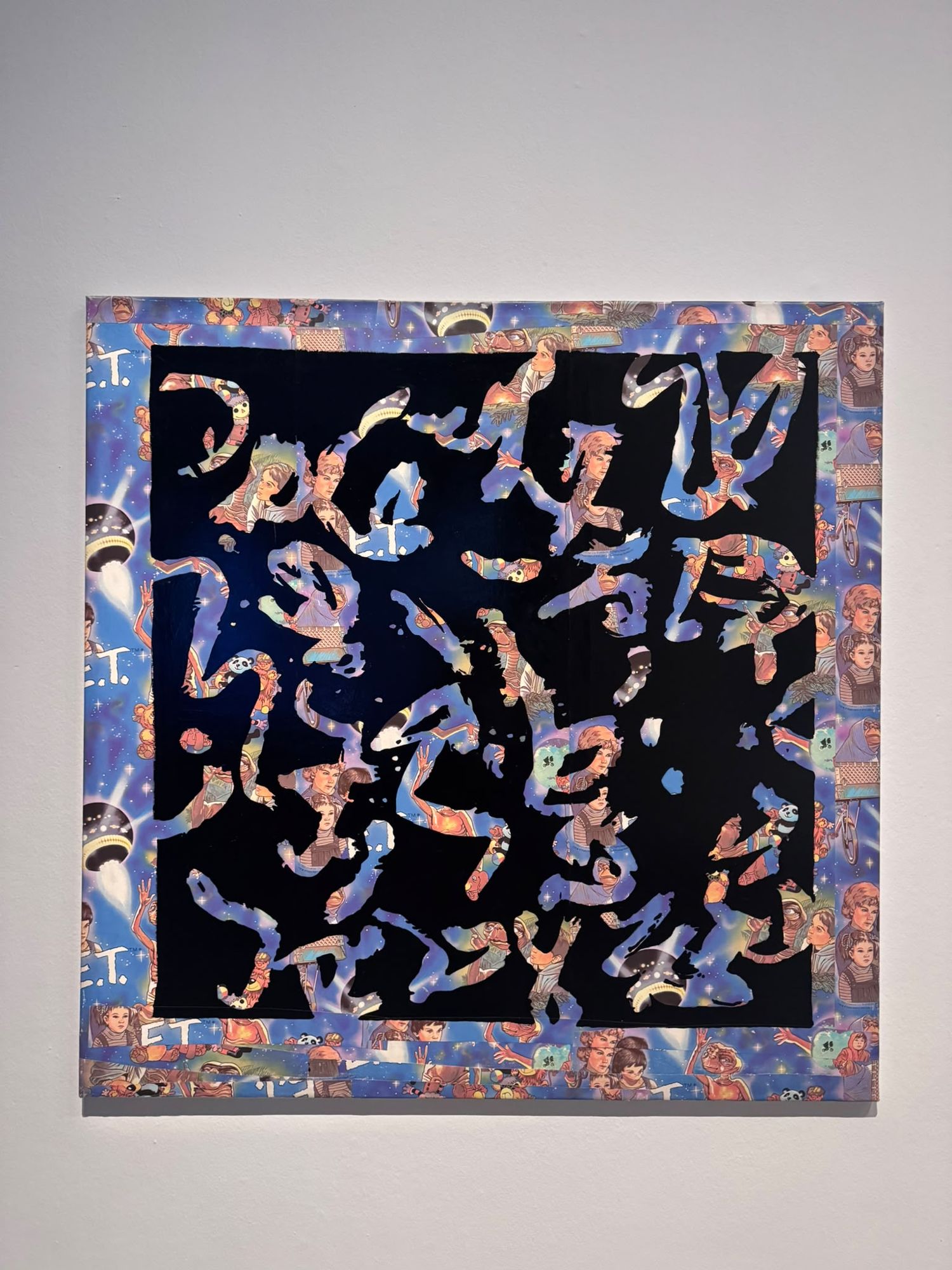
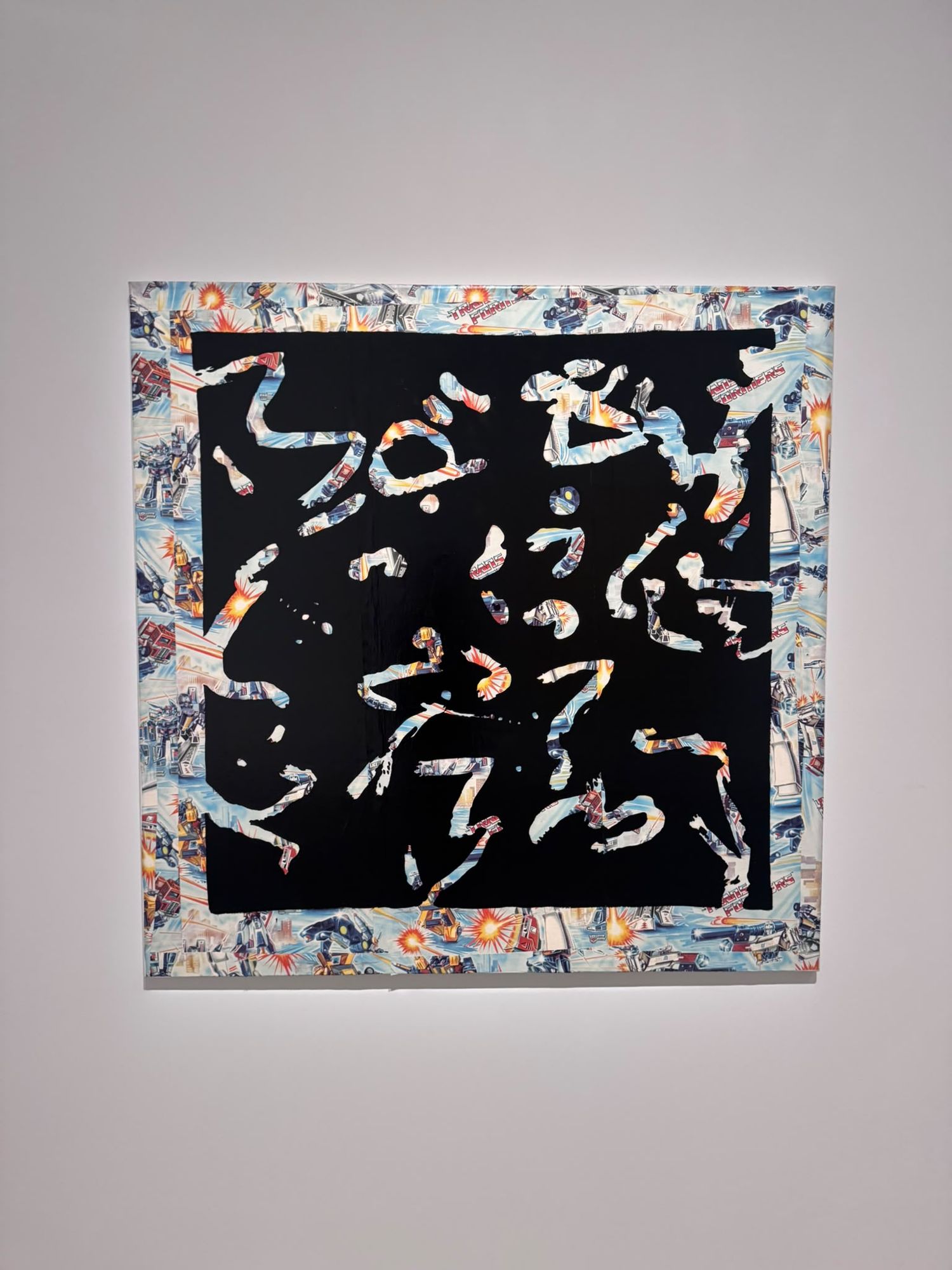
A corridor of paintings on children's wallpaper proves she could paint as well. Over a pattern of E.T., Elliott and the glowing spaceship lies a field of black, and the wallpaper shows through only in narrow loops, like a script nobody can read. Hiller worked with automatic writing for decades. The 1982 film was a whole generation's first story about a stranger who turns out to be kind, and the wallpaper hung in thousands of bedrooms. The black over it brings back the duvet you read under with a torch. Two of these paintings hang alone on a white wall, and the wall needs nothing else.
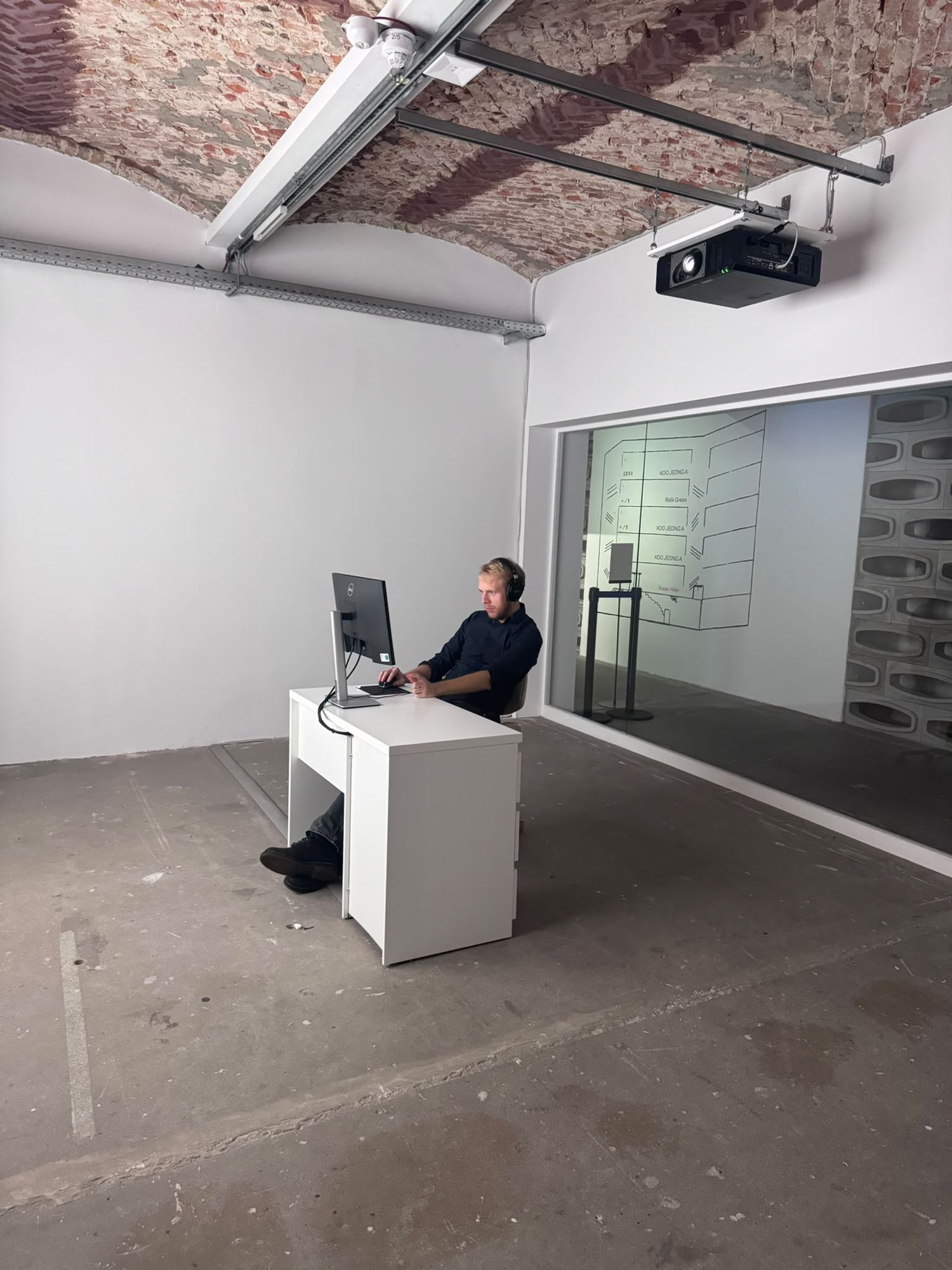
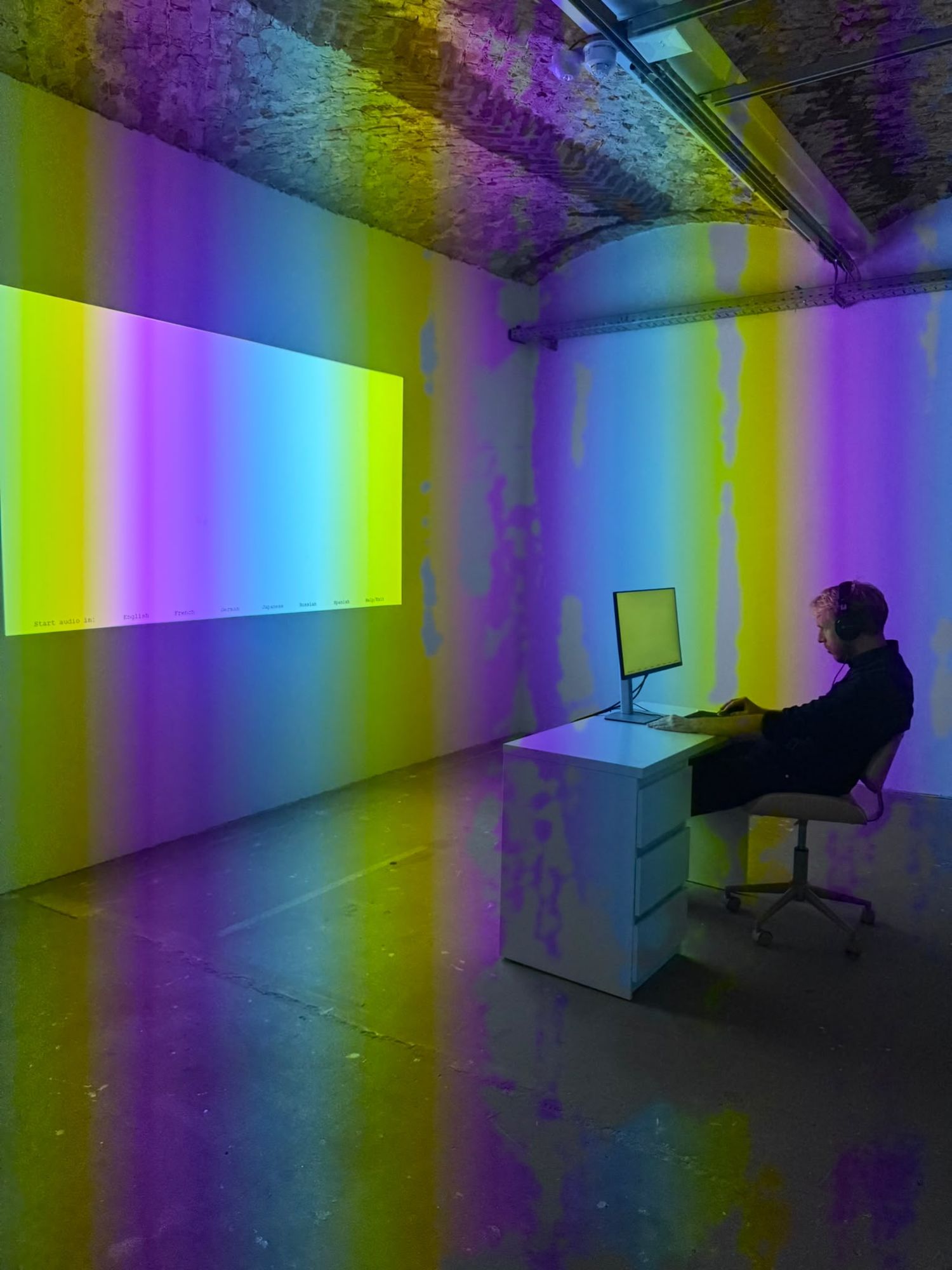
"Dream Screens" is weaker. Hiller made it in 1996 as a web piece for the Dia Art Foundation: at home you click through monochrome colour fields and listen to dream sequences in a choice of six languages. At KW it has become a white desk with a monitor and headphones in the middle of the vaulted room, and the colour on the screen is thrown as striped projection across the wall and across whoever is sitting there. It looks good. But a work made for a quiet screen turns into an office workstation with an audience. You stand beside it, wait for the chair to come free, and dream of nothing.
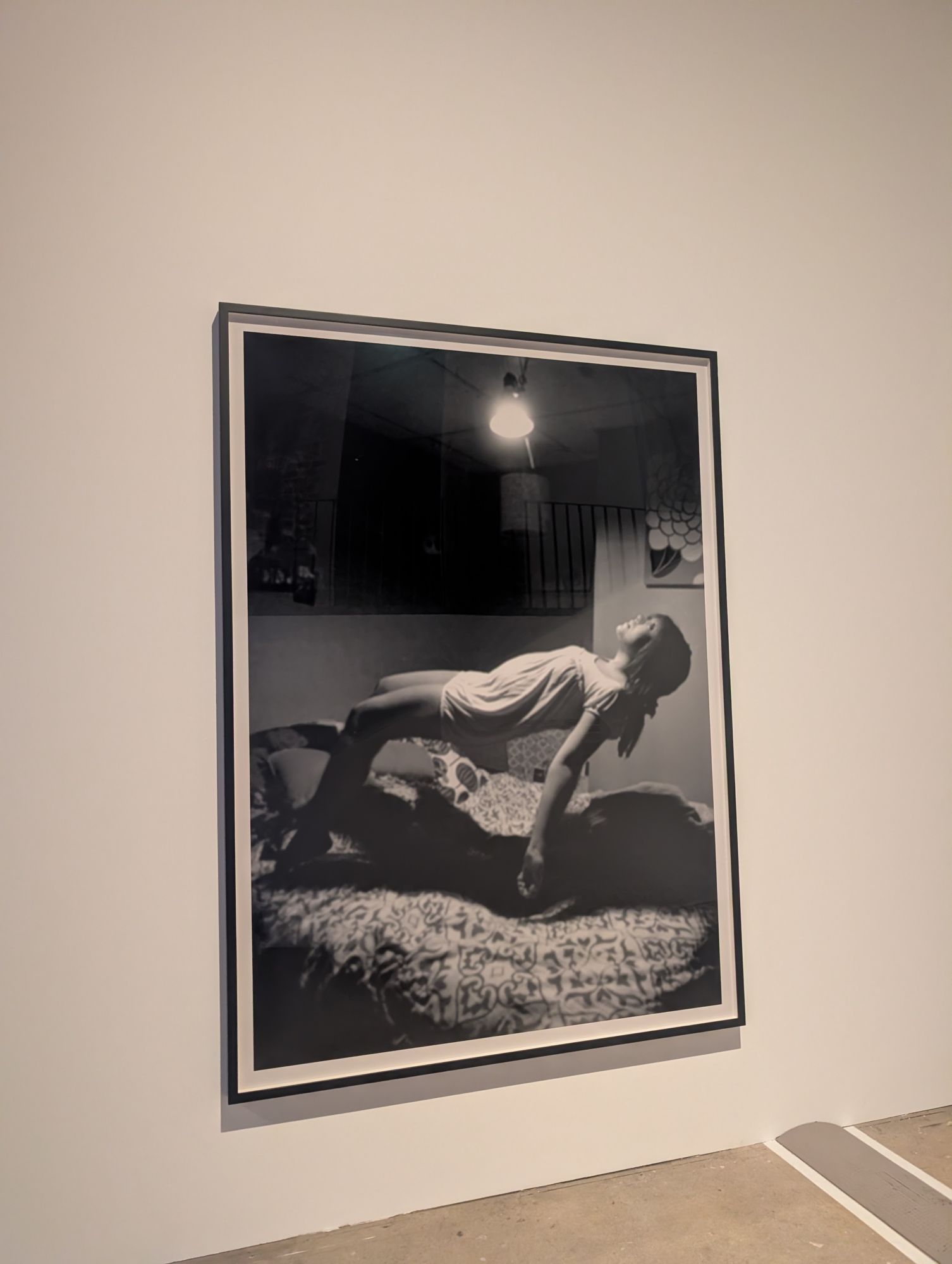
The levitators make up for it. A large black-and-white photograph shows a girl in a nightdress hanging horizontally above a bed under a bare bulb, her arms dangling. Hiller found pictures like this online, imitations of Yves Klein's leap into the void, some sincere, some trickery. She enlarges and frames them. The coarse grain won't tell you whether the girl is jumping, falling or hanging from a thread, and the longer you look, the less you want to know.
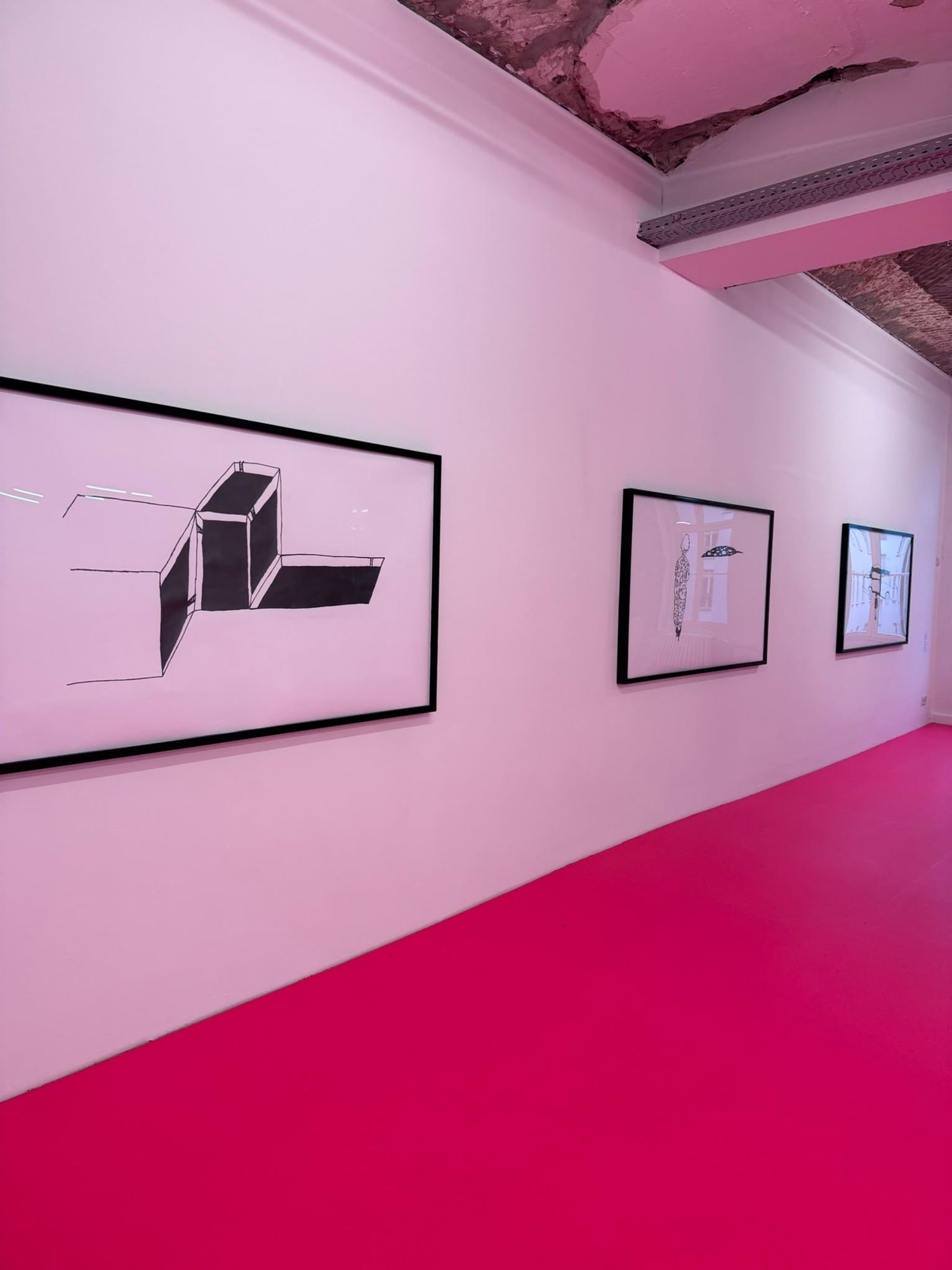
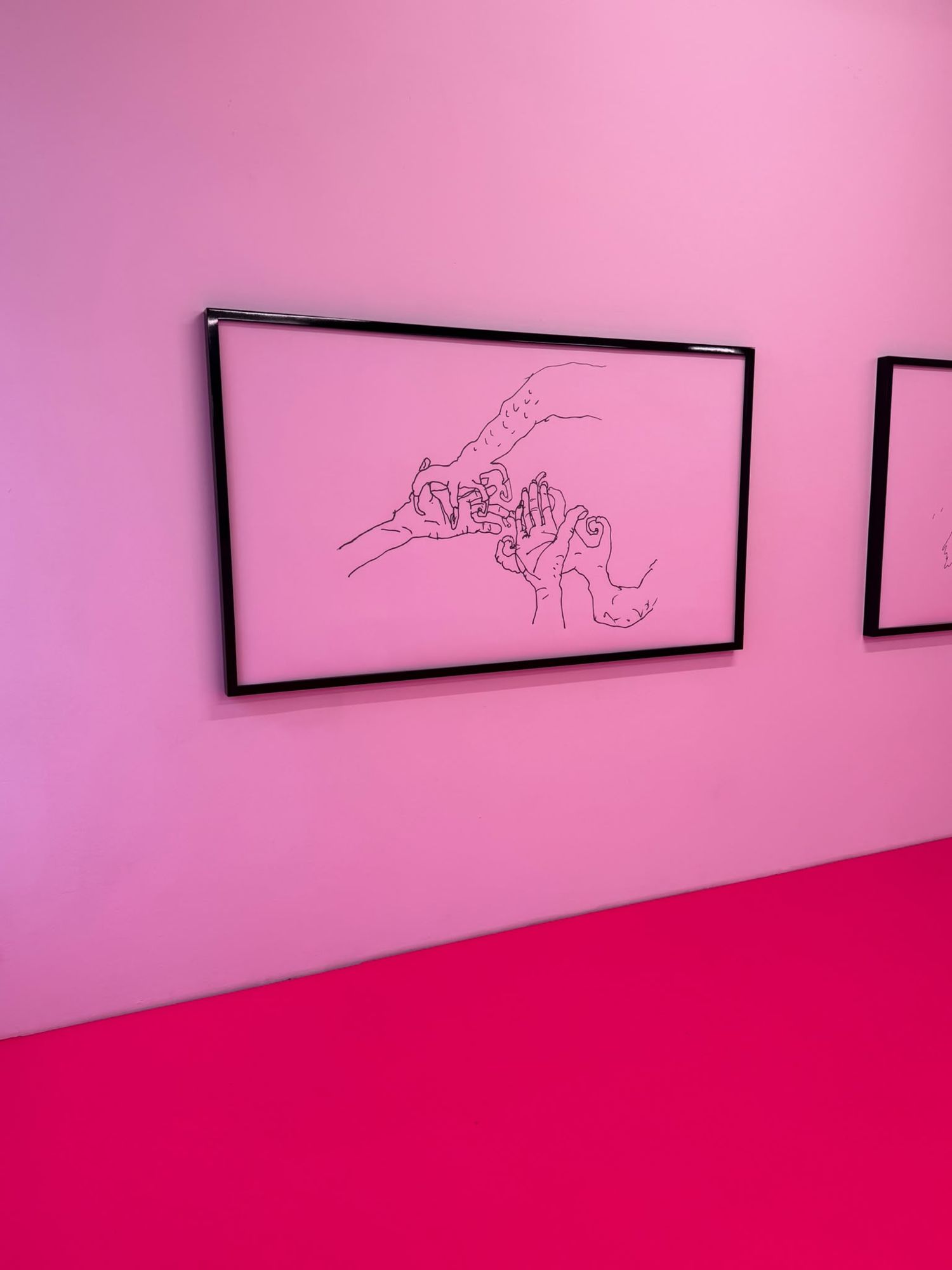
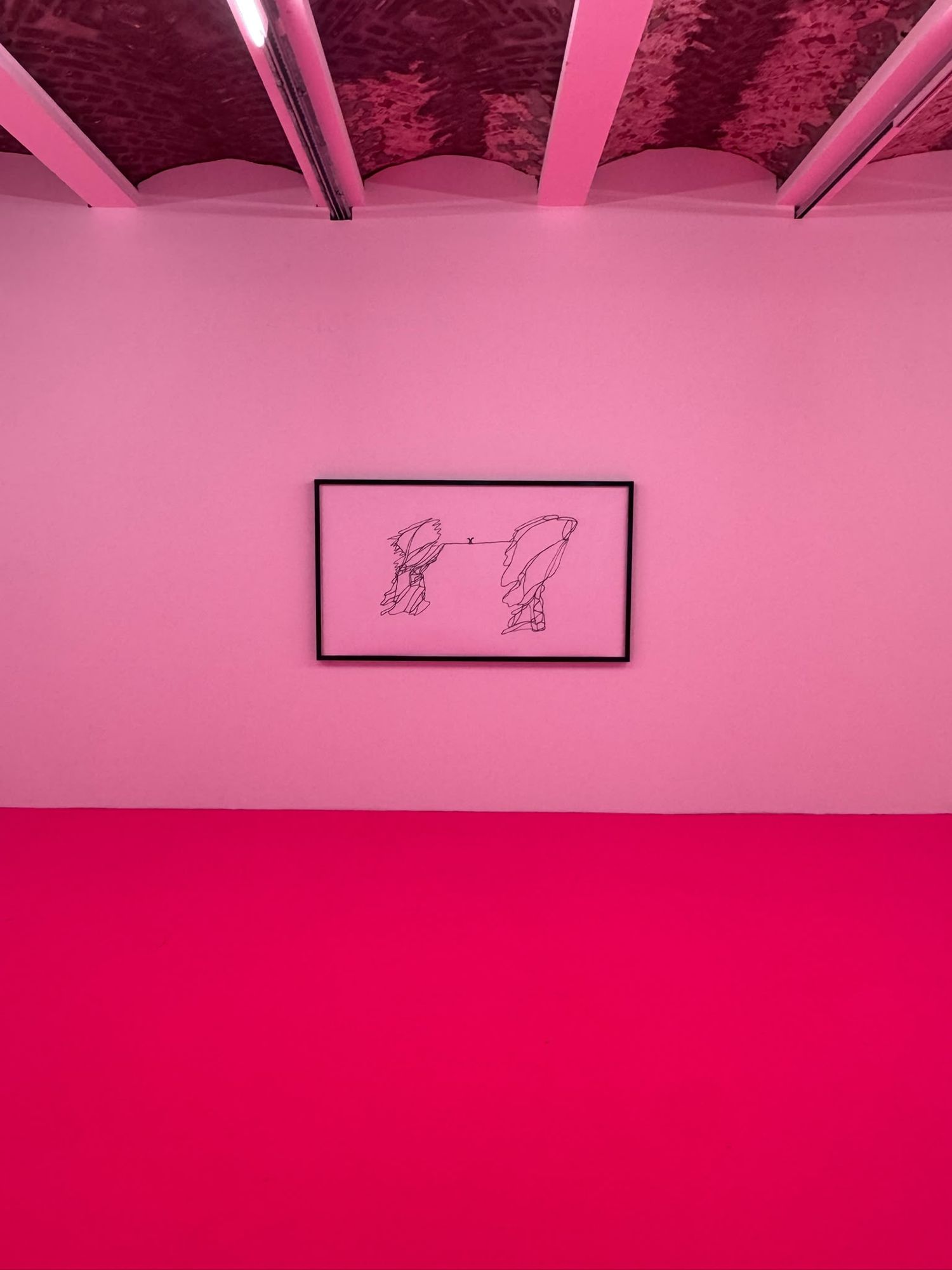
Two flights up the building belongs to Koo Jeong A. The South Korean artist, who lived in Berlin in the 1990s, has painted an entire room pink, the floor a glowing magenta, and hung framed line drawings inside it. One hand claws into the fingers of another. Two scribbled rocks with a rope between them and a tiny figure balancing on it. A block in axonometric view that looks like a staircase without a house. The pink almost swallows the drawings, it tints the paper and the skin, and you look harder because otherwise you see nothing at all.
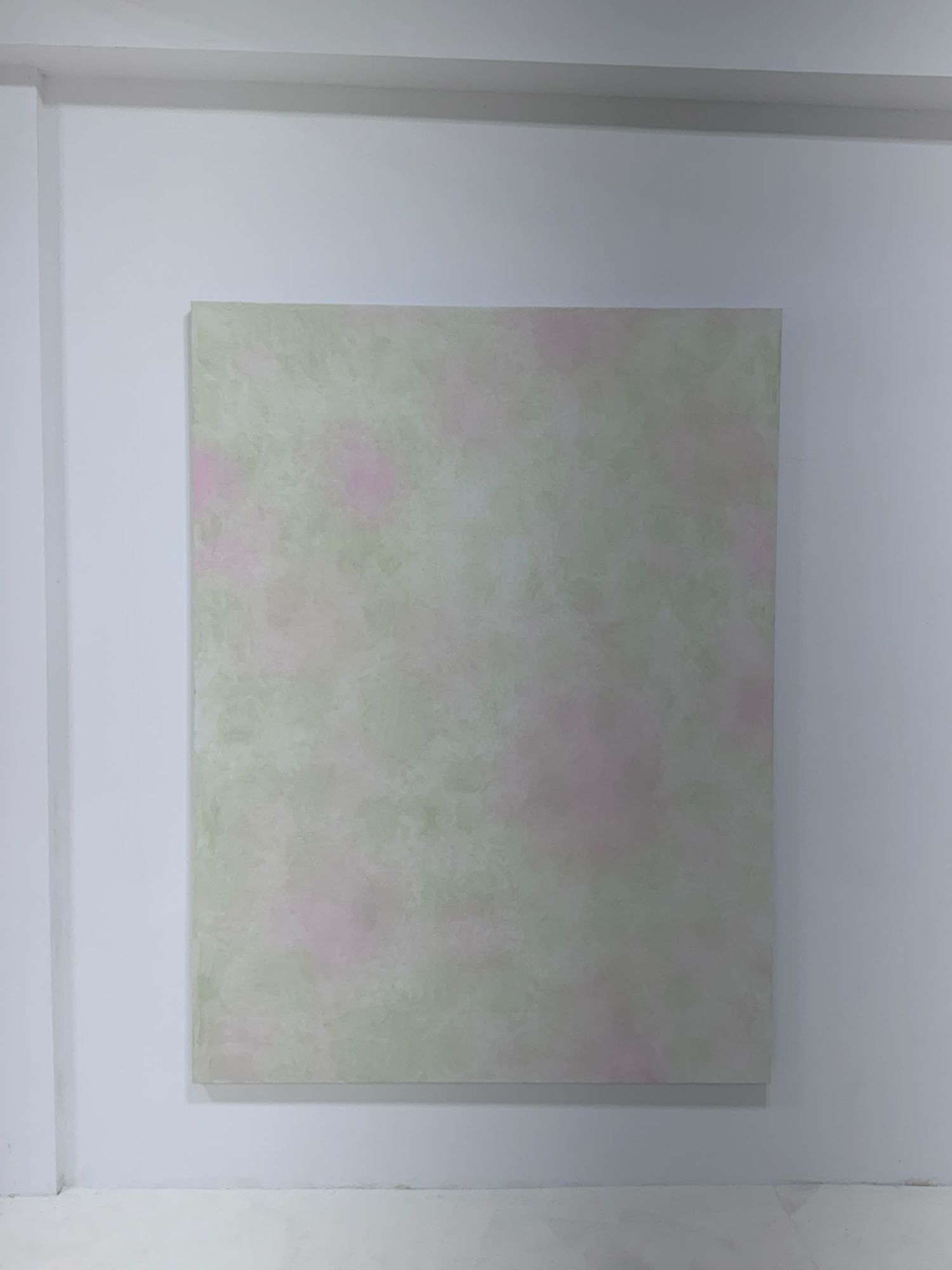
Under the roof comes "Seven Stars". Large pale canvases on which only a faint green shimmers in the light, in front of them a fluffy carpet you are allowed to sit on. Then the lights go out, and stars appear on the paintings, glowing green, nebulae and constellations, painted with phosphorescent pigment that stores light during the day. After a few seconds it is bright again and the canvases are nearly empty once more. Anyone without patience sees nothing here, and that is how Koo wants it. Three flights of stairs separate Hiller's television wall from Koo's stars, and both ask the same of you. You wait until something shows itself. Whether anything is really there, neither of them says.
Susan Hiller, "Bad Dreams", and KOO JEONG A, "OUSSSEAN", alongside Rafik Greiss, "The City and the City", are at KW Institute for Contemporary Art, Auguststraße 69, Berlin, Wednesday to Monday 11am to 7pm, until 10 January 2027.
Photographs: Florian Jäger and Shaoyilei Zhang.
Video
Impressions