Published on
TRACE METALS. Eight Names, No Label
by Florian Jäger
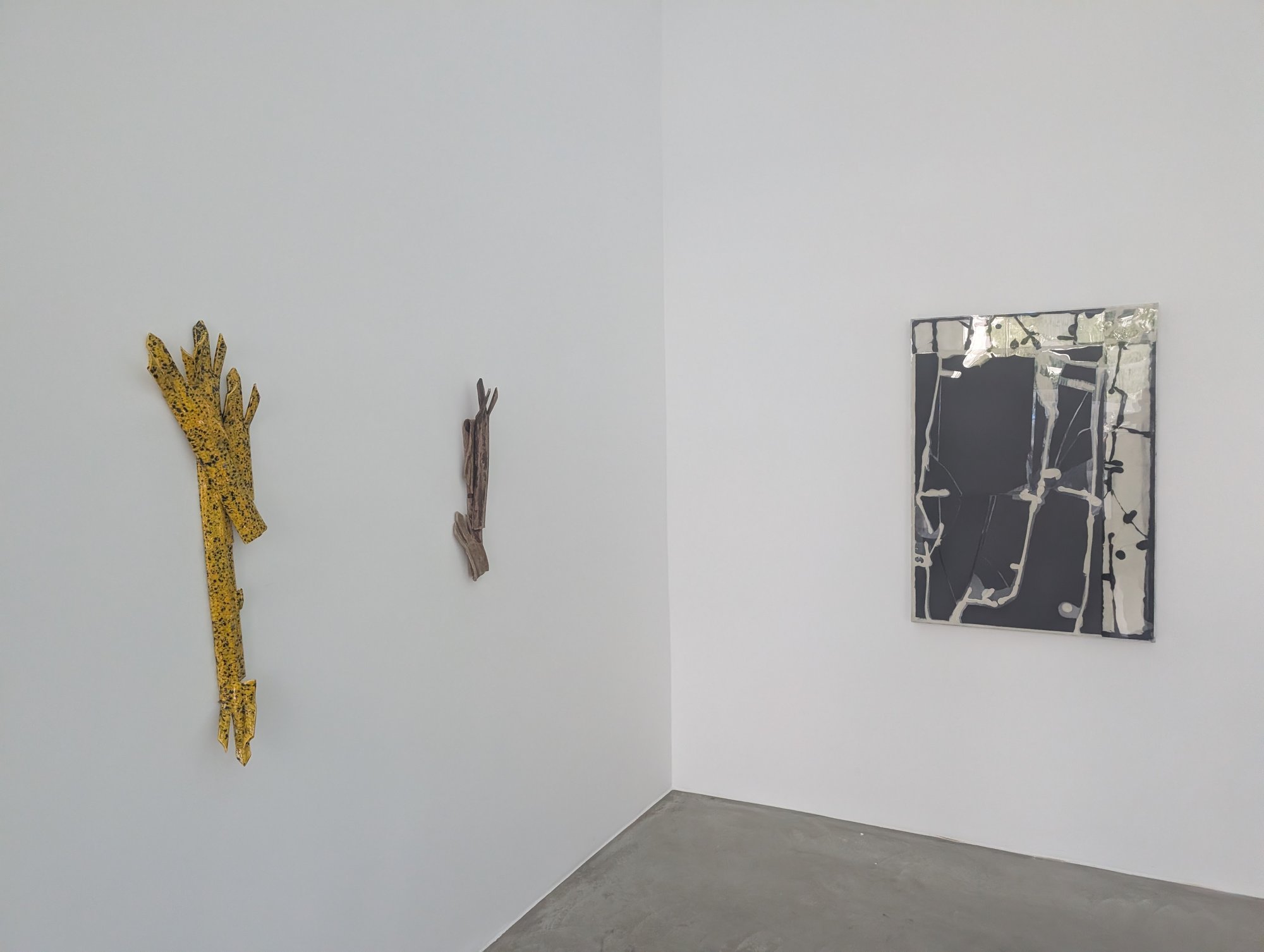
„TRACE METALS“ in der galerie burster. Foto: Florian Jäger, 13. September 2026
Sunday 13 September 2026, Markgrafenstraße 68 — the same address as Taiga Gallery, which sits in the same building. At galerie burster, "TRACE METALS" has been running since 10 September, a group exhibition with eight artists, until 24 October. According to the invitation card the participants are Clemens Behr, Marc Bijl, Bram Braam, Stephen Burke, Cosimo Casoni, Julia Eichler, Tabata von der Locht and Rutger de Vries; it was curated by Bram Braam and Stephen Burke, two of the participants. The same card carries the opening hours: Thursday and Friday noon to 6 pm, Saturday noon to 4 pm, and by appointment.
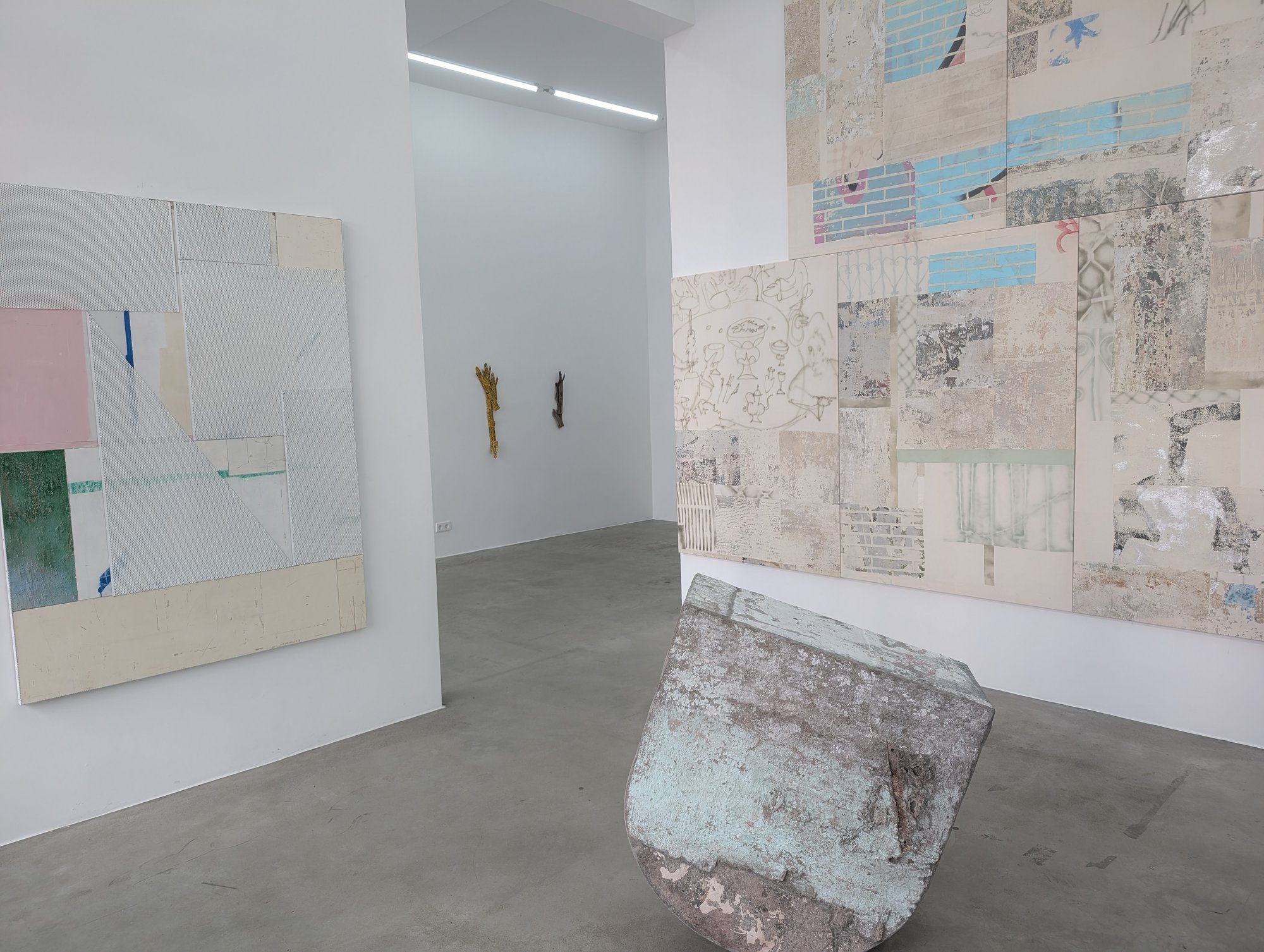
The room is white, the floor polished concrete, and a narrow opening leads into a second room where a single suspended fluorescent tube hangs. The hanging uses that axis: in one line of sight a room-wide flat work, two small wall objects seen through the opening and a heavy block on the floor line up one behind the other.
What the exhibition is about is surface, and specifically surface that has come away. On the left hangs a square assemblage, a good metre and a half each way: white perforated sheet over painted panels, fields in pink, moss green and cream, thin blue and mint strokes, one diagonal cut edge. On the right a multi-part wall work runs across eight plates in two rows, beige in ground tone, with pale blue brick grids, stencil and spray marks, fence motifs and thinly drawn outlines of vessels and figures, and silvery foil passages between them. In front of it stands, without a plinth, a wedge-shaped concrete block about hip height, with mint green and pink paint residue, chipped edges and a rusted metal fragment embedded in it.
In the corner of the room two groups of material are set against one another. On one side panels with a deep black, lacquer-like glossy ground, over it a net of white-grey lines laid on in ridges that run like cracks or weld seams; the edges are covered in crumpled metal foil that throws the light back in streaks. On the other side two branching wall objects, one glazed yellow with dark speckling and a glossy skin, one matt and rust brown.
Together this yields a palette anyone knows from the city: weathered cream, mint green, pink, rust brown, brick blue, with hard black-and-silver contrasts. And a shared method. None of the works I saw depicts anything; they cast, restack, tear off and lay down again. The title calls it trace metals, and that is exactly how the works relate to their raw material — as the residue of something that was once a facade, a hoarding or a building component.
One limitation belongs in this text: there are no labels in the rooms, at least not where I was. Eight names are on the invitation, none on the wall. Who made which work cannot be established on site, so I attribute nothing here. The only documented work is the one reproduced on the card: Bram Braam, "Urban Modernism IV", 2026, concrete, oil stick, posters, spray paint and acrylic paint, 81 by 54 by 3 centimetres.
Photographs: Florian Jäger, 13 September 2026.
Impressions